Happy Everyday Scenes Graphics for Coloring Pages Amp
As a graphic designer who spends the majority of my week refining brand identities and prepping files for print-on-demand clients, I approach every new graphic design asset with a critical eye. It is not enough for an illustration to be cute; it must be functional, versatile, and legally safe for commercial use. Recently, I evaluated the Happy Everyday Scenes Coloring Pages collection to determine its viability for a current client project involving a small business launching a line of children’s activity books and accompanying merchandise. My goal was to assess whether these assets could elevate the visual mood while maintaining the professional polish required for modern branding.
First Impressions: Mood and Visual Language
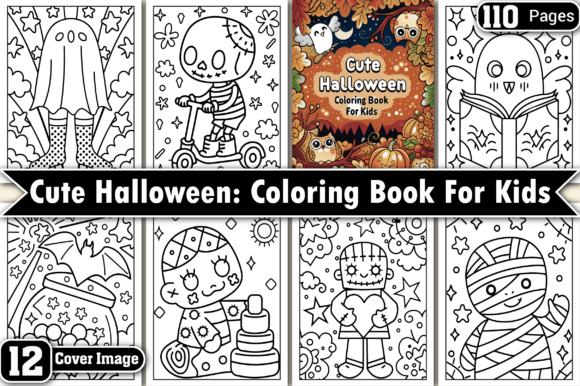
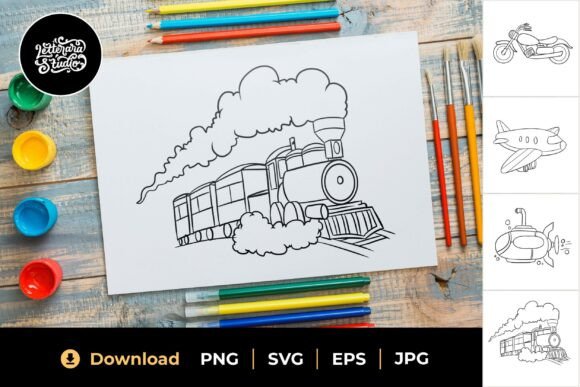
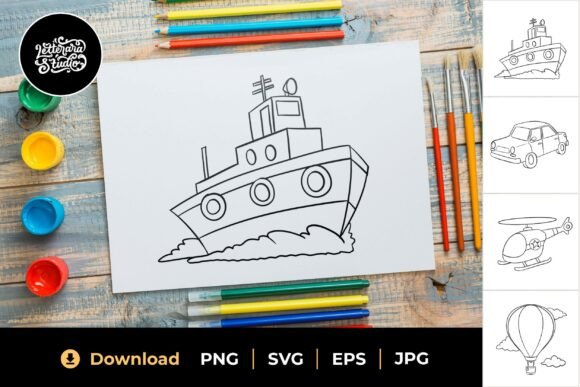
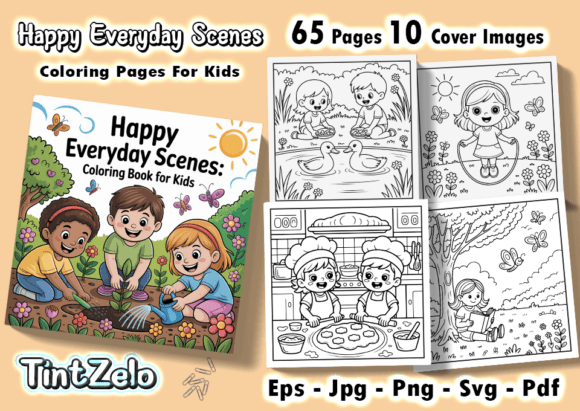
The initial preview of Happy Everyday Scenes Coloring Pages immediately establishes a tone of warmth and accessibility. The line work is clean, consistent, and inviting, avoiding the jagged or overly complex details that often frustrate young colorists. This collection captures playful moments, family fun, and park adventures in a way that feels authentic rather than generic. For a designer, this consistency is crucial. It means the assets can be mixed and matched within a single layout without creating visual dissonance.
The style leans heavily into a hand-drawn aesthetic that pairs beautifully with both serif and sans-serif typography. When I imagine these illustrations in a real-world context, they evoke a sense of nostalgia and simplicity. This makes them an ideal fit for projects targeting families, educational institutions, or lifestyle brands that prioritize mental well-being and slow living. The visual language speaks directly to an audience seeking comfort and joy, which is a powerful emotional hook in today’s saturated creative marketplace.
Application in Real Client Projects
In my recent project for a boutique Etsy shop specializing in homeschooling resources, the need for high-quality, engaging visuals was paramount. The Happy Everyday Scenes Coloring Pages served as the cornerstone for several key deliverables. Here is how I envision these assets performing across various design mediums:
- Packaging Design: The clear lines work exceptionally well on product labels and box sleeves. When scaled down, the primary subjects remain recognizable, ensuring that the packaging stands out on a crowded shelf.
- Print-on-Demand Merchandise: For t-shirt design and tote bags, these illustrations provide a solid base. They can be used as-is for a classic coloring book look or filled with flat colors for a more modern, pop-art vibe.
- Social Media Graphics: In creating Pinterest pins and Instagram posts, these assets act as excellent background elements or focal points. They encourage engagement, as followers are often tempted to screenshot and color them digitally.
- Editorial Design: For blog visuals and digital magazines, the illustrations break up text-heavy layouts, adding breathing room and visual interest without overpowering the written content.
Furthermore, for users of cutting machines, these files are invaluable for Cricut projects. Whether creating sticker designs for planners or intricate paper crafts, the precision of the lines ensures clean cuts. This versatility transforms a simple digital product into a multi-purpose tool for crafters and small business owners alike.
Strategic Placement and Visual Hierarchy
Understanding where to place these assets is just as important as selecting them. In my experience, Happy Everyday Scenes Coloring Pages thrive in large layout areas where they can serve as hero graphics. They command attention when given space to breathe, making them perfect for cover pages, poster headers, or the front of greeting cards. However, designers must be cautious when using them in crowded layouts. Because the style is detailed and organic, placing these illustrations against busy backgrounds can reduce readability and disrupt the visual hierarchy.
I recommend using these illustrations as decorative accents in minimalist branding rather than trying to force them into complex, corporate-style materials. They shine brightest in themed collections and campaign visuals where the goal is to evoke emotion rather than convey strict data. For instance, in a seasonal campaign for a local community event, these images can unify flyers, invitations, and banners under a cohesive, cheerful theme.
Technical Considerations for Professional Use
Before integrating any design bundle into a client’s final deliverables, rigorous testing is non-negotiable. Here are the practical steps I took when reviewing these assets:
- Contrast Testing: I placed the black-and-white line art on both pure white and off-white backgrounds to ensure maximum contrast. I also tested them on dark backgrounds by inverting the colors, which revealed their potential for sublimation design on dark fabrics.
- Scalability Check: I previewed the images at various sizes, from tiny favicon dimensions to large format prints. The vector-based nature of many such collections ensures that edges remain crisp, but it is vital to confirm if you are working with SVG design files or high-resolution PNG design files.
- Typography Pairing: I experimented with pairing the illustrations with different font styles. A handwritten font complemented the playful nature of the scenes, while a clean sans-serif font provided a modern counterpoint. Avoid overly ornate display fonts that might compete with the intricate details of the illustration.
- File Format Verification: For web design and Canva template creation, PNG files with transparent backgrounds are essential. For print-on-demand and large-scale printing, I always verify the availability of vector formats to ensure infinite scalability without pixelation.
Licensing and Commercial Viability
Perhaps the most critical aspect of using third-party assets is understanding the licensing terms. For any commercial design project, confirming the commercial license is mandatory. Clients need to know they can safely use these assets for Etsy products, marketing visuals, and brand identity materials without legal repercussions. The Happy Everyday Scenes Coloring Pages are positioned as a robust resource for small business branding, offering the flexibility needed for diverse applications.
When building a brand identity, consistency is key. These illustrations help establish a recognizable visual voice. Whether used in logo design elements, website graphics, or physical product mockups, they contribute to a cohesive brand story. For handmade businesses, this level of professional polish can significantly enhance perceived value and customer trust.
Final Verdict for Designers
In conclusion, Happy Everyday Scenes Coloring Pages represent a high-quality addition to any designer’s toolkit. They are not merely clipart; they are versatile building blocks for creating engaging, emotionally resonant designs. From sticker design to editorial layouts, these assets offer the flexibility and charm required in today’s visual landscape. By carefully considering placement, contrast, and licensing, designers can leverage these illustrations to create standout work that delights clients and end-users alike. For those looking to infuse their projects with sunshine and simple joys, this collection is a worthy investment.