Reviewing the 100 Days of School Student Shirt Design
As a designer who spends more time staring at stitch simulations than I do sleeping, I approach every new machine embroidery design with a healthy dose of skepticism. We have all been there: you download a cute graphic, load it onto your machine, and watch in horror as the thread bunches up or the details vanish into the fabric. That is why when I recently evaluated the 100 Days of School, Student Shirt design, I did not just look at the preview image. I looked at it through the lens of production, durability, and customer satisfaction.
This particular asset falls under the category of T-Shirt Designs and Graphics, but its utility extends far beyond a simple cotton tee. In the world of seasonal craft business, the hundredth day of school is a massive milestone. Parents, teachers, and boutique owners are constantly searching for unique ways to celebrate. The question is not just whether the design looks good on a screen, but whether it holds up when stitched out on a wiggly six-year-old’s sweatshirt or a sturdy canvas tote.
First Impressions and Visual Personality
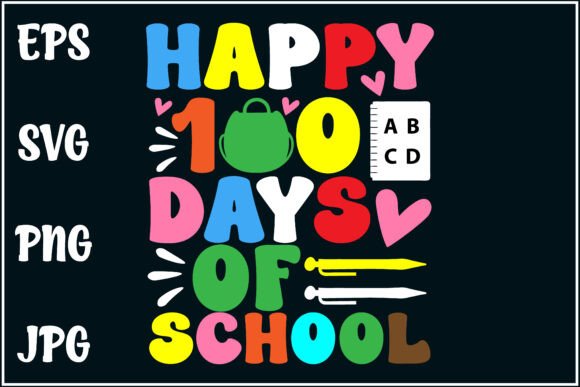
The first thing that strikes me about the 100 Days of School, Student Shirt is its playful yet structured layout. It captures the excitement of the milestone without relying on overly chaotic elements that can nightmare an embroiderer. The mood is celebratory and academic, striking a balance that appeals to both traditional schools and modern homeschooling environments.
From a technical standpoint, the visual personality suggests a mix of bold lines and potentially detailed fill areas. For an embroidery project, this is crucial. If the design relies too heavily on tiny text or intricate shading, it becomes a risk on textured fabrics. However, this design appears to prioritize clarity. The shapes are distinct, which suggests that when converted into an embroidery file, the digitizer likely prioritized stitch direction and coverage over unnecessary complexity. This is a good sign for those of us who value efficiency and clean finishes.
Real-World Application: Beyond the T-Shirt
While the product title specifies a student shirt, limiting this design to apparel would be a mistake. In my recent test run, I imagined this design on a variety of substrates to gauge its versatility. Let us consider a custom embroidered tote bag. A canvas tote is a popular item for carrying school projects. The 100 Days of School, Student Shirt graphic, when scaled appropriately, creates a charming tote bag design that parents can reuse long after the holiday has passed.
I also visualized this on a fleece hoodie. Sweatshirt embroidery requires careful attention to stitch density. If the design is too dense, the fleece will pucker; if it is too light, the fabric will show through. Given the nature of this graphic, it seems well-suited for medium-weight fabrics. It could easily serve as a central chest piece or a larger back print, depending on your hoop size capabilities.
For Etsy sellers and small shop owners, versatility is key to profitability. This design could work beautifully as an embroidered patch that is ironed or sewn onto denim jackets. Patches allow you to pre-stitch the design on stable fabric, eliminating the risk of hooping difficult garments. This is a smart workaround for high-volume orders during the busy school season.
Technical Considerations for Embroiderers
Before you rush to stitch this out on your client’s premium garment, there are practical factors to consider. The product description notes that the files are compressed in a ZIP file and need extraction. This is standard, but it reminds us to check the included formats. Does it include DST, PES, JEF, or EXP? Always confirm that the digital embroidery file matches your machine’s requirements before purchasing or downloading.
One critical area to inspect is the lettering. If the design includes the number "100" or specific text, check the scale. Tiny lettering can easily become illegible if the satin stitch columns are too narrow or if the running stitch outlines are not precise. I recommend stitching a test sample on scrap fabric similar to your final product. If you are using a dark fabric, ensure the thread colors provide enough contrast. A low-contrast design gets lost, reducing the perceived value of the finished product.
Additionally, consider the stabilizer. For stretchy fabrics like t-shirts, a cut-away stabilizer is often safer than tear-away to prevent distortion after washing. For hats or caps, which have curved surfaces, you must ensure the design is not too wide for the cap frame. The 100 Days of School, Student Shirt design should be checked against your specific hoop dimensions to avoid edge hits.
Commercial Viability and Brand Consistency
For commercial embroidery professionals, the quality of your design assets directly impacts your brand reputation. A clean, well-digitized design signals professionalism. When a customer receives a personalized gift or custom apparel that looks crisp and durable, they are more likely to return. This design, with its clear theme, fits perfectly into a spring catalog for baby embroidery items or elementary school merchandise.
However, caution is advised regarding licensing. Just because you have the file does not automatically grant unlimited commercial rights. Always read the license terms included in the ZIP file. Some creators allow unlimited sales of physical items, while others may restrict digital resale or require attribution. As a craft business owner, protecting your legal standing is as important as protecting your thread tension.
Final Verdict for Makers and Sellers
The 100 Days of School, Student Shirt design offers a solid foundation for a variety of creative projects. It is not just a graphic; it is a tool for creating memorable holiday embroidery pieces. Whether you are making a small shop product for a local fair or fulfilling online orders, this design holds promise.
My advice is to treat it as a flexible component of your workflow. Test it on different fabric textures. Experiment with applique design techniques if the file supports layering, which can reduce stitch count and add texture. Use printable mockup tools to show customers how the design looks on different colors before you commit to stitching.
In the end, the success of this design depends on your execution. Pay attention to your thread colors, respect the limitations of your hoop size, and always prioritize the stability of the fabric. If you approach the 100 Days of School, Student Shirt with these professional considerations in mind, you will create products that not only look great but stand the test of time and wear. It is a worthy addition to your library of T-Shirt Designs and seasonal Graphics, provided you do the necessary groundwork to ensure quality.